The brief
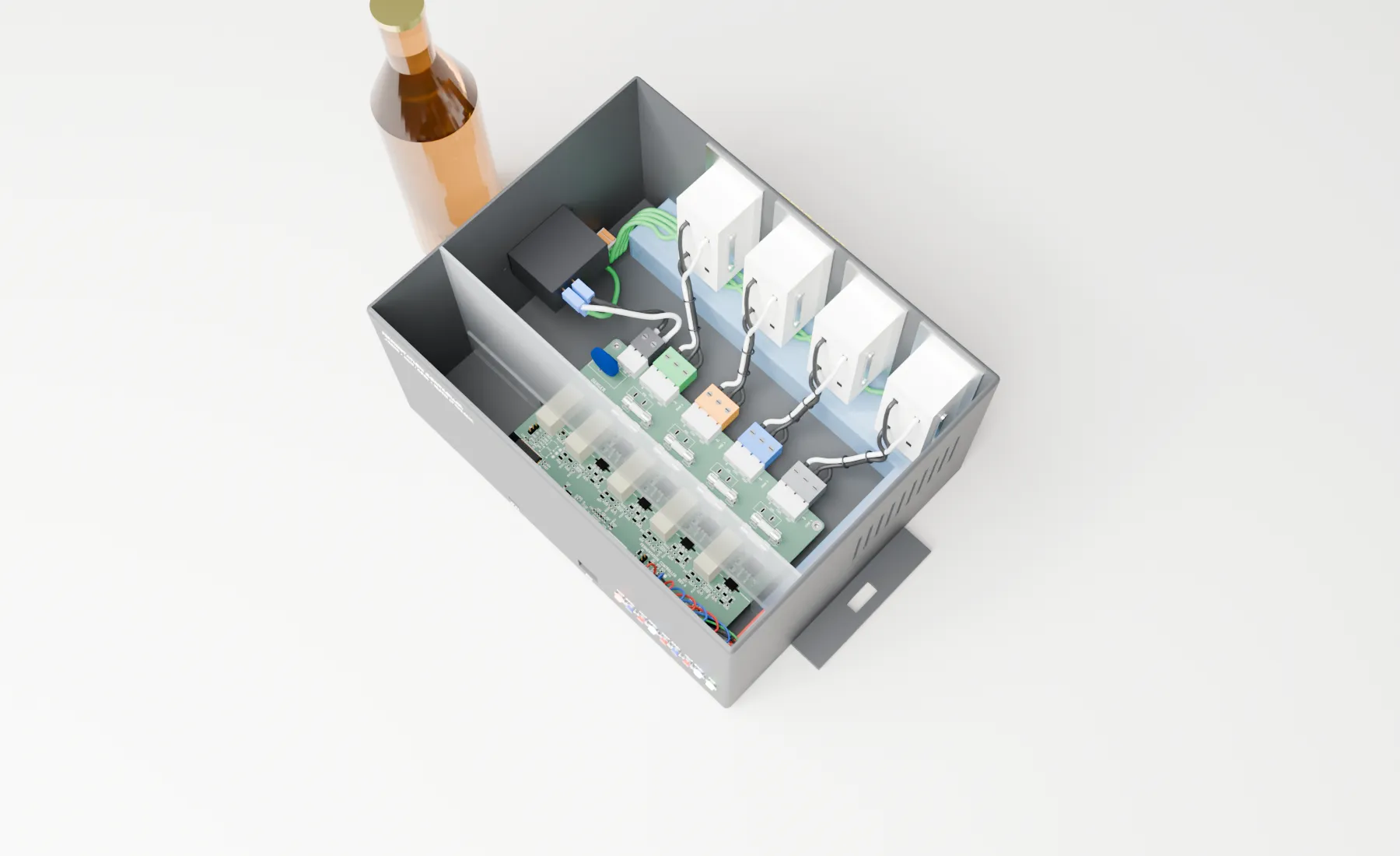
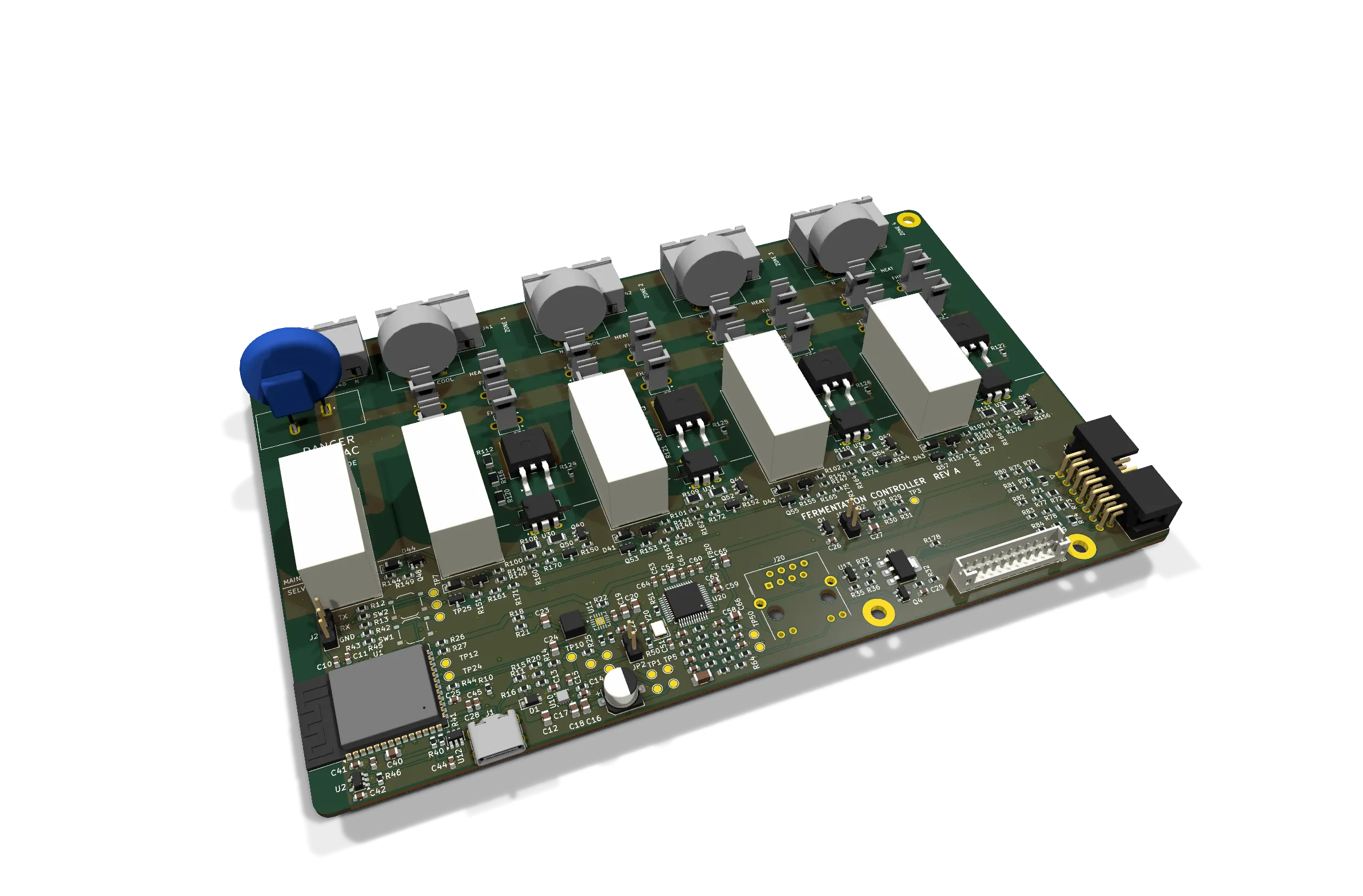
A four-zone temperature controller that switches 120 VAC heaters and glycol pumps, designed as a real product: schematic, PCB, BOM, turnkey-assembly outputs, enclosure and firmware plan. Low-voltage electronics run from USB-C only; mains stays inside the box.
Engineering highlights
- Fail-safe by design. The microcontroller keeps its output states through a crash reboot, so heaters are held off by five independent means: gate pull-downs, a default-off supply rail to every driver, a boot-time pin reset, an external hardware watchdog, and a master relay against a shorted triac.
- Mains parts rated for surge, not just line voltage. Surge analysis drove 800 V switching devices and a thermally protected surge suppressor.
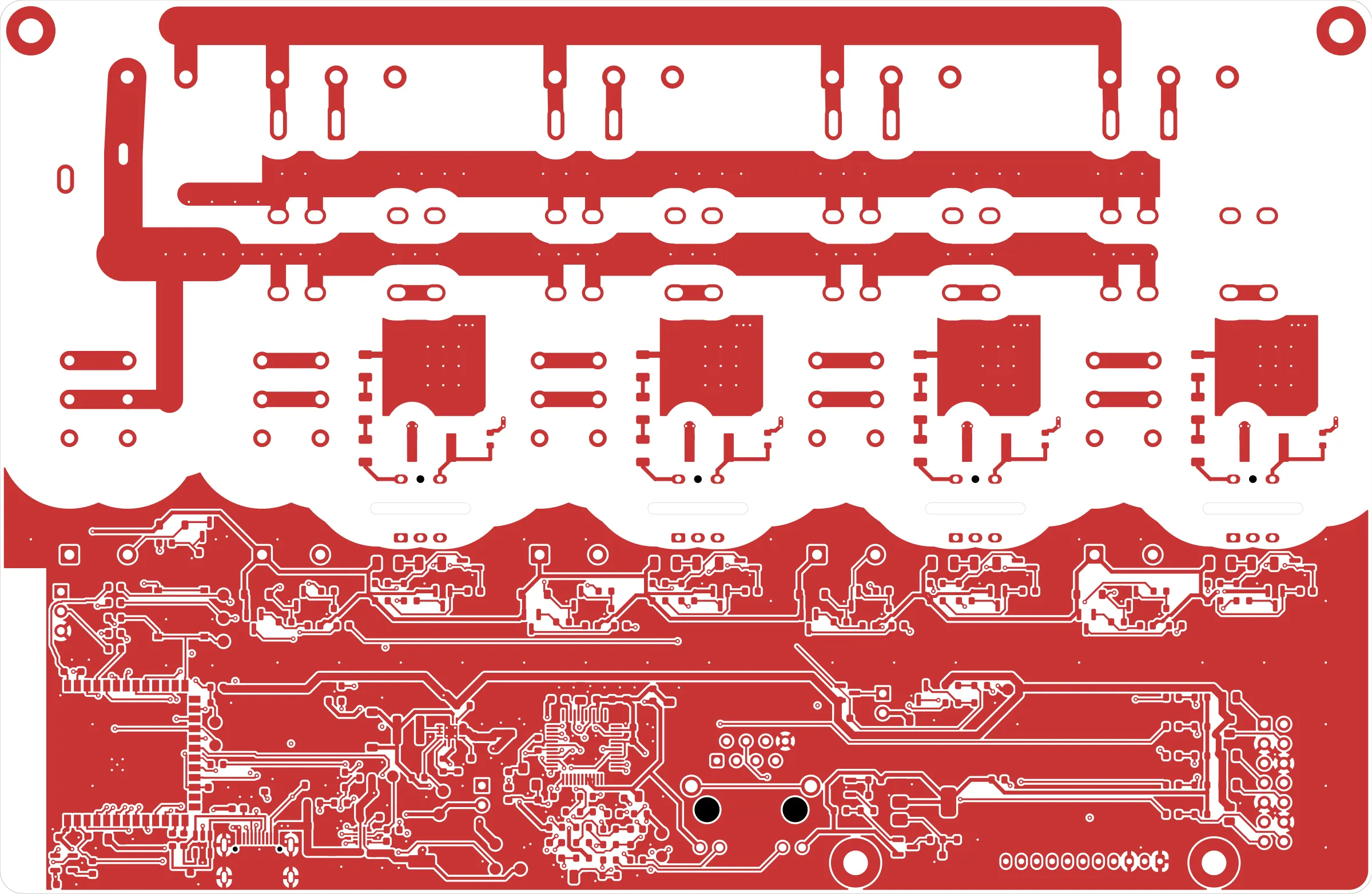
- Copper sized to the protecting fuse. Every mains conductor was checked by script for temperature rise at the fuse rating, and isolation distances were verified as data: 48 mains nets with zero barrier crossings.
- Controlled impedance from a field solver. USB and Ethernet pairs were set by a 2D field solver against the fab house’s published stackup before routing.
Process
Five review gates (architecture, components, schematic, placement, routing), each approved before the next began. Four independent review passes ran 281 checks on mains stress, low-voltage stress and pin-outs, and changed the design three times before release.